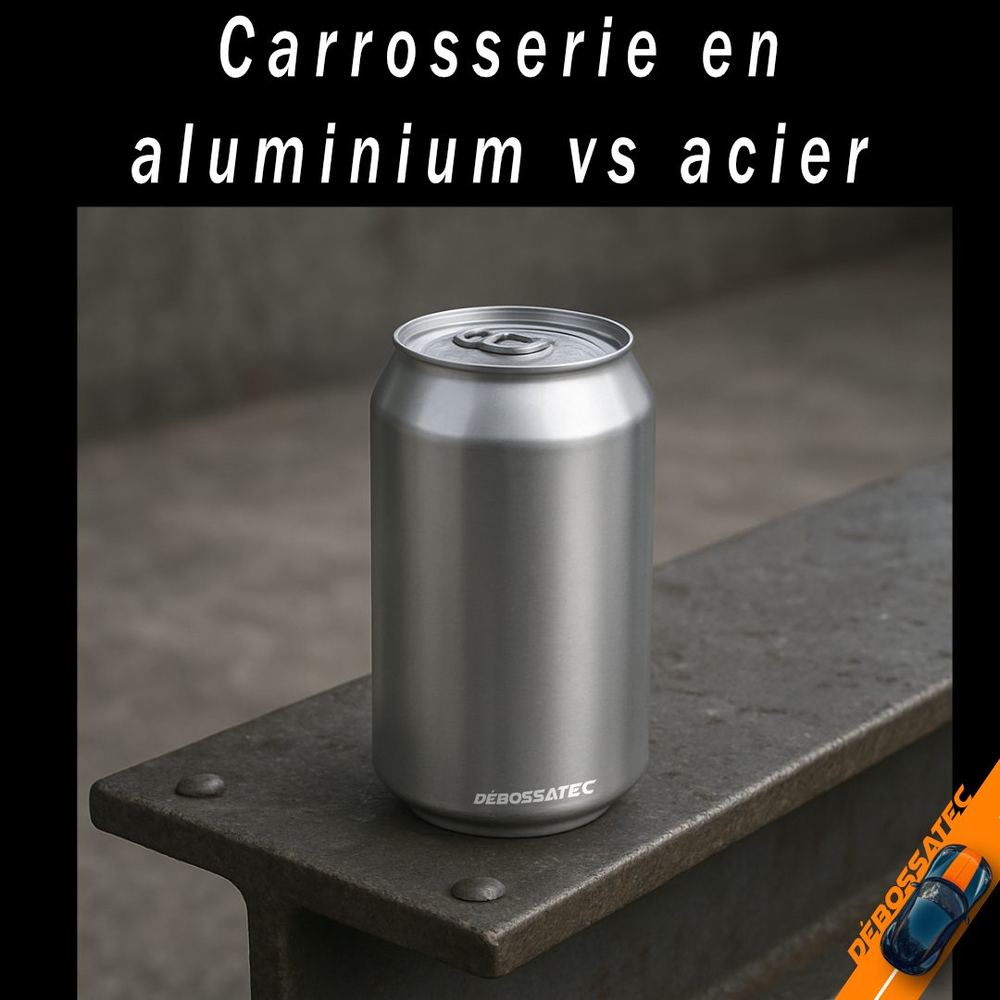
When people talk about how solid a car is, the same question comes up: aluminum or steel, which one protects you better in an impact? Some believe one has to be stronger than the other, but the reality is a little more nuanced. In this article, we break it down to help you understand.
Aluminum and steel: two materials, two behaviours
🔩 Steel: strong and proven
Steel is the traditional material used to build cars, and has been for decades. It’s dense, rigid, easy to weld and easy to straighten. It absorbs impacts well by deforming in a controlled way, which helps protect the occupants in a collision.
⚙️ Aluminum: light but surprising
Aluminum, for its part, keeps getting more popular, especially in modern, electric or high-end vehicles. It’s about 30 to 40% lighter than steel, which improves energy efficiency. Contrary to what you might think, aluminum can be very strong, but it reacts differently to impacts: it tends to crack or tear instead of bending.
Impact resistance: it depends on what we’re talking about
🚘 Structural strength
In a major accident, it’s the car’s whole structure (often called the “safety cell”) that comes into play. In modern vehicles, that structure is usually a mix of materials (ultra-high-strength steel, aluminum, composites). So it isn’t just the material of the outer panels that makes all the difference.
🛠️ Repairability after an impact
This is where the differences get very concrete:
- Steel straightens out more easily. That makes it simpler to work with in a body shop.
- Aluminum calls for specialized techniques, sometimes even separate equipment, to avoid cross-contamination. It’s also harder to weld.
The result? Aluminum repairs can cost more and take longer.
And for a small dent?
A small dent on a steel fender can often be fixed with paintless dent repair (PDR), depending on where it is and how much access there is behind the panel. On aluminum, PDR is possible, but more complex and workable less often. Aluminum doesn’t come back to its original shape as readily.
And on the safety side?
The takeaway: both materials can deliver a high level of safety, it all depends on how they’re used in the vehicle’s design. A well-designed aluminum car can be just as safe as a steel model, if not safer.
Automakers invest millions in crash testing to make sure their vehicles meet the strictest standards, whatever the material.
So… which one is “better”?
👉 Neither one is better in absolute terms. Steel is easier to repair and often cheaper. Aluminum is lighter and allows for modern designs, but demands more precision and more skill to repair.
At Débossatec, we’re trained and equipped to work with both materials, with the same attention to detail and to safety.
📍 Got a dent, a fender-bender or need a paint touch-up? Drop by any time, no appointment needed. 208 Rue Kennedy, Terrebonne, Qc 450-581-0333