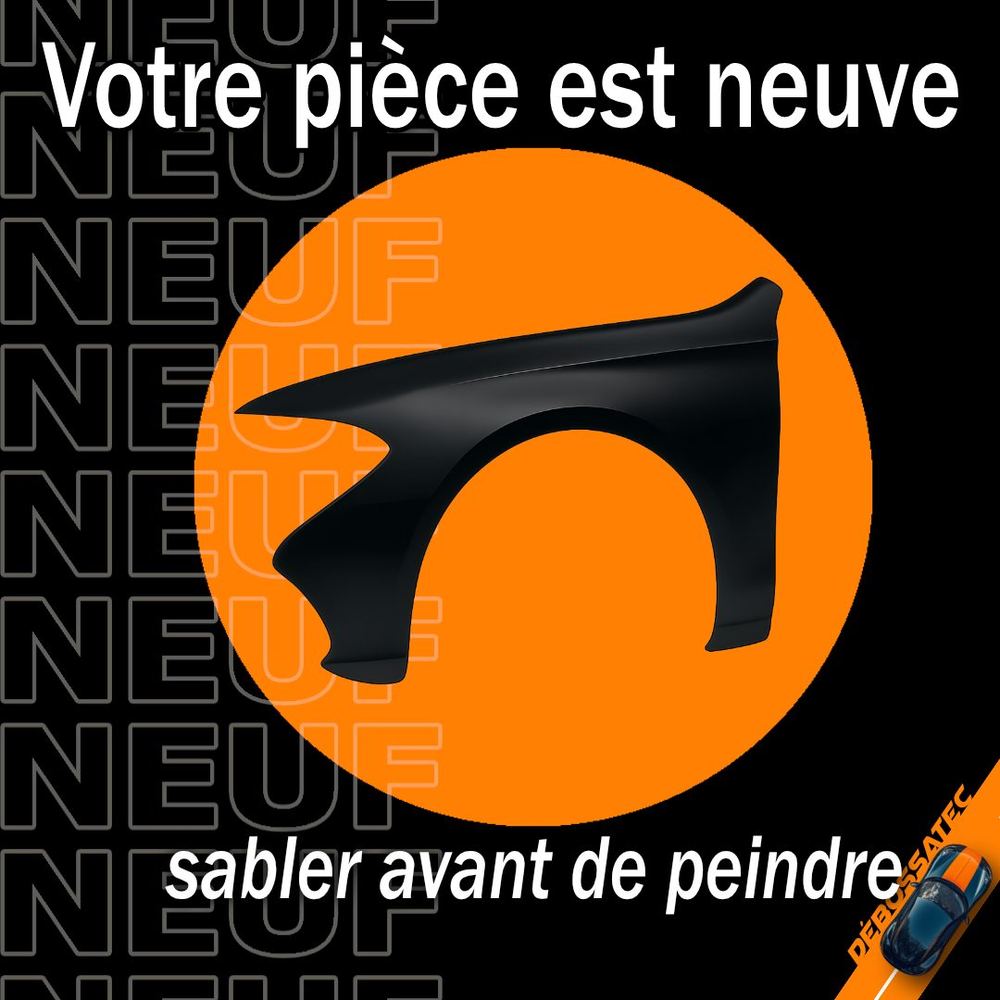
➡️ Common myth: “The part is new, so there’s no need to sand it.” ❌ Wrong. And skipping that step can get expensive. Very expensive.
At Débossatec, we hear this often from customers who bought a brand-new fender, door or bumper. At first glance the part looks perfect: no dents, no rust, no paint. So why waste time sanding it?
The reality: sanding is what makes the paint stick
Even a new part rarely shows up “ready to paint.” It’s usually covered in a black or grey primer called a shipping primer. That coating is there to protect the part from corrosion in transit — but it is not designed to be painted over.
Without sanding, the paint doesn’t bond well
When you put paint on a smooth or contaminated surface, it doesn’t adhere properly. The result?
- Chipping
- Peeling off in sheets
- Bubbling
- Paint that flakes off after a few months
Sanding the surface creates a controlled microporosity that lets the base coat (primer) bite properly, and then lets the paint hold on solidly. It’s a critical step for the durability of the finish.
Plastic needs prep too
Plastic bumpers and mouldings need special attention. After sanding, you often have to use an adhesion promoter so the paint will hold, especially on the more flexible or oily plastics. These are finicky materials: prep them badly and the paint can crack on the first impact or lift off over time.
In short:
✅ A new part isn’t ready to paint
✅ Shipping primer is not a reliable base
✅ Sanding guarantees optimal adhesion
✅ Skipping that step means taking a big risk
At Débossatec, every part, new or used, is carefully sanded and prepped before it’s painted. That attention to detail is what lets us offer a finish that lasts and a lifetime warranty on our work.
We’re here to help you take care of your car — appointment or not. Drop by the shop or get in touch:
📍 208 Rue Kennedy, Terrebonne
📞 450-581-0333
📧 info@debossatec.com